
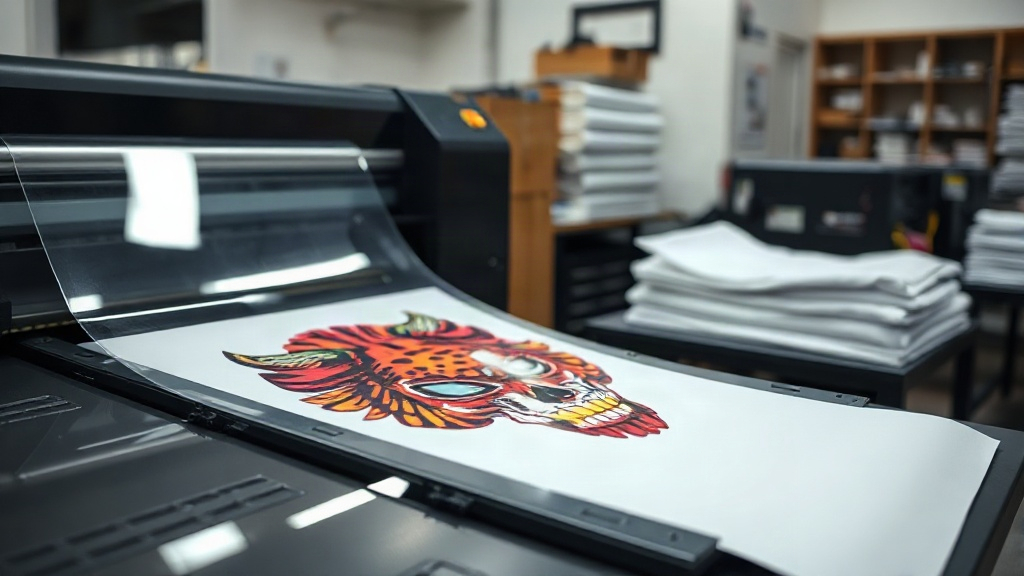
If you sell custom apparel online, you've probably heard about DTF printing. It's one of the hottest trends in the print on demand world, and for good reason. Unlike other methods, DTF (Direct to Film) lets you print vibrant, full-color designs on a wide range of fabrics without the hassle of weeding or the limitations of color restrictions. In this guide, I'll walk you through everything you need to know about DTF printing, from how it works to why it might be the perfect fit for your print on demand business.
I've spent the last few years working with various printing techniques, and I can tell you that DTF has genuinely changed the game for small shops and large operations alike. Whether you're just starting out or looking to expand your product line, understanding DTF can give you a competitive edge.
What Exactly is DTF Printing?
DTF stands for Direct to Film. It's a printing method where your design is printed onto a special film, then coated with a adhesive powder, and finally heat-pressed onto the fabric. The result is a durable, stretchable print that feels soft to the touch and holds up wash after wash.
The process involves a few key steps:
- Your design is printed onto a PET film using specialized DTF inks.
- A hot melt powder is applied to the wet ink while it's still on the film.
- The film is cured (usually with a heat press or oven) to melt the powder.
- The transfer is then placed onto the garment and heat-pressed, bonding the design to the fabric.
One of the biggest advantages of DTF is that it doesn't require pretreatment or special coatings on the fabric. That means you can use it on cotton, polyester, blends, and even some synthetic materials. This versatility is a huge plus for print on demand sellers who want to offer a variety of products without investing in multiple printing setups.
DTF vs. DTG: What's the Difference?
Direct to Garment (DTG) printing is another popular method, but it has its limitations. DTG works best on 100% cotton and often requires pretreatment, which adds time and cost. DTF, on the other hand, adheres to a much wider range of fabrics and doesn't need pretreatment. Plus, DTF transfers can be stored and used later, making them ideal for on-demand production. If you're selling on multiple platforms or offering a diverse product catalog, DTF gives you more flexibility.
DTF vs. Vinyl: Why DTF Wins for Complex Designs
Heat transfer vinyl (HTV) is great for simple designs, but it requires weeding, which is time-consuming and not practical for intricate artwork. DTF eliminates weeding entirely. You can print full-color, photographic-quality images with gradients and fine details, and the transfer is ready to press. For print on demand, where efficiency is key, DTF saves hours of labor.
Why DTF is a Game-Changer for Print on Demand
Print on demand is all about producing items quickly and efficiently, often one at a time. DTF fits perfectly into this model for several reasons:
- No minimums: You can print a single transfer or thousands, making it ideal for on-demand orders.
- Wide fabric compatibility: Sell t-shirts, hoodies, tote bags, and more, all with the same equipment.
- Vibrant colors: DTF inks produce bright, opaque prints even on dark fabrics.
- Durability: When applied correctly, DTF prints withstand repeated washing without cracking or fading.
- Cost-effective: The supplies are relatively inexpensive, and you don't need a huge inventory of blanks.
I've seen many POD sellers switch to DTF and drastically reduce their production time while expanding their product offerings. It's a smart move if you want to scale.
How to Get Started with DTF Printing
Ready to dive in? Here's a step-by-step guide to help you start your DTF journey.
1. Choose Your Equipment
You'll need a few essentials:
- DTF printer: A dedicated DTF printer (like those from Epson or Roland) or a converted inkjet printer. Prices range from a few hundred to several thousand dollars.
- DTF inks: Specially formulated inks that work with the film and powder.
- PET film: The transfer medium. Look for double-sided matte film for best results.
- Hot melt powder: The adhesive that bonds the ink to the fabric. There are different types for different fabrics.
- Heat press: A reliable heat press is crucial for curing the powder and applying the transfer.
- Curing oven or heat gun: For melting the powder onto the film.
If you're just starting, you might consider outsourcing your DTF transfers to a service. Many companies offer DTF printing services where you upload your design and receive ready-to-press transfers. This lets you test the waters without a big investment.
2. Master the Printing Process
The DTF process has a learning curve, but once you dial in your settings, it's smooth sailing. Here are key steps:
- Design preparation: Create your artwork in a program like Photoshop or Illustrator. Remember to mirror the image before printing, as the transfer will be flipped when pressed.
- Printing: Load the PET film into your printer and print using DTF inks. Ensure your printer settings are correct for the film type.
- Powder application: While the ink is still wet, sprinkle hot melt powder evenly over the design. Shake off excess powder.
- Curing: Place the film in a curing oven or use a heat gun to melt the powder until it becomes glossy. This usually takes 2-3 minutes at around 160°C (320°F).
- Pressing: Set your heat press to the recommended temperature (usually 160°C) and pressure. Press the transfer onto the garment for 10-15 seconds, then peel the film off while it's hot or cold, depending on the film type.
It's important to follow the specific instructions for your materials, as different powders and films have varying requirements.
3. Quality Control and Troubleshooting
Common issues include dull colors, cracking, or poor adhesion. Here's how to fix them:
- Dull colors: Ensure you're using the right ink profile and that your powder is fully cured.
- Cracking: This often happens if the transfer is stretched too much or if the powder wasn't cured properly. Adjust your curing time and temperature.
- Poor adhesion: Make sure the fabric is clean and free of wrinkles. Also, check that you're using the correct powder for your fabric type.
I recommend keeping a log of your settings and results. It helps you replicate success and quickly identify what went wrong.
DTF Printing for Your Print on Demand Business
Integrating DTF into your POD workflow can open up new opportunities. You can offer custom designs on demand without holding inventory. Plus, DTF transfers have a long shelf life, so you can print popular designs in bulk and store them until an order comes in. This hybrid approach combines the best of both worlds: efficiency and scalability.
Many POD sellers use DTF for sample production or for items that are difficult to print with other methods. For example, polyester performance wear, which doesn't take DTG well, works great with DTF. You can also print on canvas bags, hats, and even shoes.
Frequently Asked Questions About DTF Printing
How long do DTF prints last?
When applied correctly, DTF prints can last as long as the garment itself. They withstand dozens of washes without fading or cracking. To maximize longevity, wash inside out in cold water and avoid ironing directly on the print.
Can I use DTF on 100% polyester?
Absolutely. DTF adheres well to polyester and polyester blends. In fact, it often outperforms DTG on synthetic fabrics. Just ensure you use a powder suitable for synthetics and adjust your press settings accordingly.
What's the best way to store DTF transfers?
Store them in a cool, dry place away from direct sunlight. Keep them flat or rolled, not folded, to prevent creases. Properly stored, DTF transfers can last for months.
Do I need a special printer for DTF?
You can convert a standard inkjet printer (like certain Epson models) to use DTF inks, but dedicated DTF printers are designed for this purpose and often yield better results. If you're serious about DTF, investing in a dedicated printer is worth it.
Is DTF printing eco-friendly?
DTF printing uses water-based inks, which are more environmentally friendly than some other methods. However, the PET film and powder do create some waste. Look for biodegradable films and eco-friendly powders if sustainability is a priority.
There you have it: a comprehensive look at DTF printing for print on demand. It's a powerful tool that can help you grow your business and delight your customers with high-quality, durable prints. Give it a try, and you might just find it becomes your go-to method.