
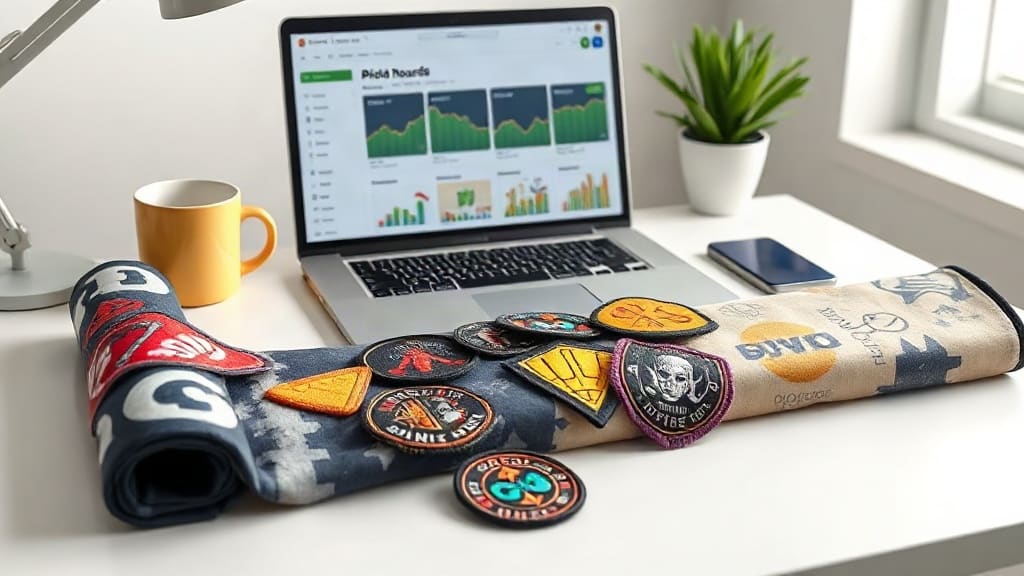
If you're looking for a low-risk way to start a merchandise business, print on demand might be the perfect fit. Instead of buying inventory upfront, you only pay when a customer places an order. This model has exploded in popularity for apparel, but it's also incredibly effective for accessories like custom patches and event staples like custom banner products. In this guide, I'll walk you through how to leverage print on demand for these items, share practical design tips, and show you how to market them effectively.
Why Choose Print on Demand for Custom Products?
The biggest advantage of print on demand is that it eliminates financial risk. You don't have to sink money into bulk orders that might not sell. This is especially beneficial for products like custom patches and banners, which are often ordered in specific sizes and quantities. With a POD partner, you can offer a wide range of customization options without worrying about dead stock. Plus, the production and shipping are handled for you, so you can focus on building your brand and marketing.
Understanding Custom Patches in the POD World
Custom patches are a fun and versatile product. They can be sewn onto jackets, backpacks, jeans, or even used as decorative elements on hats. In the print on demand context, you can create embroidered or woven patches with your own designs. The process is straightforward: you upload your artwork, choose the size and shape, and the POD company produces it only after a customer orders.
Types of Custom Patches You Can Offer
There are several types of patches you can sell through print on demand:
- Embroidered patches: Classic, textured, and durable. Great for logos and text.
- Woven patches: More detailed and smoother than embroidered, perfect for complex designs.
- PVC patches: Made from soft rubber, ideal for 3D effects and outdoor gear.
- Chenille patches: Fuzzy and retro, often used for varsity letters.
Each type has its own appeal, so offering a variety can attract more customers. For example, a motorcycle club might prefer embroidered patches, while a tech company might go for PVC to showcase a modern logo.
Custom Banners: A High-Impact Product
Custom banners are another excellent product for print on demand. They are used for events, trade shows, storefronts, birthdays, and more. With POD, you can offer vinyl banners, fabric banners, or even mesh banners for outdoor use. The key is to provide a user-friendly design tool that lets customers add their own text and images.
Popular Use Cases for Custom Banners
Here are some scenarios where people need custom banners:
- Business grand openings and promotions
- Trade show displays
- Birthday and wedding décor
- Sports team spirit signs
- Charity events and fundraisers
By offering a range of sizes and materials, you can cater to both indoor and outdoor needs. For instance, a customer might want a small fabric banner for a dessert table and a large vinyl banner for the entrance.
How to Integrate Custom Patches and Banners into Your POD Store
If you already have a print on demand store, adding custom patches and banners is a logical expansion. Here's how to do it seamlessly:
Choose the Right Print on Demand Platform
Not all POD services offer patches and banners. You'll need to research which ones do. Some popular platforms include Printful, Printify, and CustomCat. Compare their product catalogs, pricing, and shipping times. Also, check the quality of their embroidery and printing. For patches, look for services that offer a variety of backing options, like iron-on or Velcro. For banners, ensure they have multiple finishing options, such as hemmed edges or grommets.
Design with the Product in Mind
Designing for patches and banners requires different considerations than for t-shirts. For patches, you need to account for the border and the minimum stitch width. Avoid overly thin lines and small text. For banners, readability from a distance is critical. Use bold fonts and high-contrast colors. Since customers will often upload their own designs, it's helpful to provide templates and guidelines.
Set Up Mockups That Sell
Product photos make a huge difference in conversion rates. Use lifestyle images that show the patch on a jacket or the banner at an event. Most POD platforms offer mockup generators, but you can also create your own using design software. Showing scale is especially important for banners, so include photos with people to give a sense of size.
Marketing Your Custom Patch and Banner Products
Once your products are live, you need to drive traffic. Here are some effective marketing strategies:
Target Niche Audiences
Custom patches appeal to specific groups like bikers, scouts, or military personnel. Custom banners are needed by event planners and small businesses. Use social media ads and content that speaks directly to these niches. For example, create a blog post about "How to Start a Patch Collection" or a video showing a business setting up a banner at a trade show.
Leverage SEO with Long-Tail Keywords
People often search for very specific phrases like "custom embroidered patches for motorcycle jackets" or "custom vinyl banner for birthday party." Incorporate these long-tail keywords into your product titles, descriptions, and blog content. This helps you rank higher in search results and attract ready-to-buy customers.
Offer Bundles and Upsells
Increase your average order value by suggesting related products. If someone is buying a custom patch, they might also need a matching cap or jacket. If they're ordering a banner, offer them tablecloths or pop-up displays. Many POD platforms allow you to set up upsells easily.
Real-World Examples and Success Stories
To inspire you, let me share a couple of scenarios:
Case Study 1: A small Etsy seller started offering custom patches for local sports teams. By using print on demand, they didn't have to commit to large quantities. They marketed their patches through Facebook groups for parents and quickly gained a loyal following. Their key to success was offering a quick turnaround and excellent customer service.
Case Study 2: A print on demand store focused on business signage. They offered custom banners for trade shows. By creating a user-friendly design tool that allowed customers to upload their logos and see a live preview, they differentiated themselves. They also provided a helpful guide on banner sizes and materials, which boosted their credibility and sales.
Potential Challenges and How to Overcome Them
Like any business, there are hurdles. Here are a few:
Quality Control
When you rely on a third-party printer, you don't control the production. To mitigate this, order samples from your chosen POD company to check quality. If issues arise, communicate with the provider and adjust your designs or instructions.
Shipping Times
Custom products often take longer to produce and ship. Be transparent about this on your product pages. Offer expedited options if available, and consider using a POD service with production facilities in your target markets.
Returns and Exchanges
Because products are made to order, returns can be tricky. Clearly state your return policy. For damaged items, work with your POD provider to issue replacements.
The Future of Print on Demand for Custom Products
The print on demand industry is evolving. Advances in embroidery technology are making custom patches even more detailed and colorful. For banners, eco-friendly materials are becoming more popular. As a seller, staying updated on these trends can give you a competitive edge. Additionally, integrating with e-commerce platforms like Shopify or WooCommerce is becoming smoother, allowing for a more automated order flow.
Conclusion
Print on demand has opened up opportunities for entrepreneurs to sell custom products without massive upfront costs. Custom patches and custom banner products are profitable niches that many POD sellers overlook. By choosing the right platform, designing with the product in mind, and marketing to niche audiences, you can build a successful online business. Start small, test designs, and scale what works. The key is to provide value and quality, and your customers will reward you with repeat orders.
Frequently Asked Questions
What is the minimum order quantity for custom patches and banners with print on demand?
One of the best things about print on demand is that there is no minimum order quantity. You can order a single patch or a single banner if you want. This is ideal for testing designs or for customers who only need one item. However, some platforms may offer bulk discounts, which can increase your profit margin.
How long does it take to produce and ship custom patches and banners?
Production times vary by platform and product. Typically, embroidered patches take 2 to 5 business days to produce, while banners might take 2 to 4 days. Shipping then depends on your location and the customer's address. Always check the estimated delivery times provided by your POD partner.
Can I sell custom patches and banners on my own website using print on demand?
Absolutely. Most print on demand services integrate with popular e-commerce platforms like Shopify, WooCommerce, and Etsy. They provide apps or plugins that sync orders automatically. This allows you to sell on your own branded website without worrying about inventory or fulfillment.
What is the profit margin for custom patches and banners?
Profit margins depend on your pricing strategy and the base cost from your POD provider. On average, you can expect a markup of 30% to 50% over the production cost. For example, if a custom patch costs $5 to produce, you might sell it for $10 to $15. Banners have higher absolute costs but also higher sale prices, so the percentage margin is similar.
How do I ensure the quality of the custom patches and banners?
To ensure quality, always order samples before listing a product. Check the embroidery density, color accuracy, and material. For banners, look at the printing resolution and the finishing. If you offer a custom design tool, make sure it previews the final product accurately. Also, read reviews of your POD provider to gauge their reliability.